

You say it to the cashier. You say it at the end of a work call. You type it as a closer on nearly every email you send. “Have a good day” has become the verbal equivalent of a period at the end of a sentence, something you add out of habit rather than intention. If you’ve ever wondered about other ways to say have a good day that actually sound like you mean them, this guide is going to help.
Below, you’ll find casual options for friends, polished lines for work, warm phrases for someone going through a hard time, and quick one-word send-offs for when you’re in a hurry. By the end, you’ll have a full toolkit of ways to say have a good day that fit whatever situation you’re actually in.
Why “Have a Good Day” Feels So Automatic
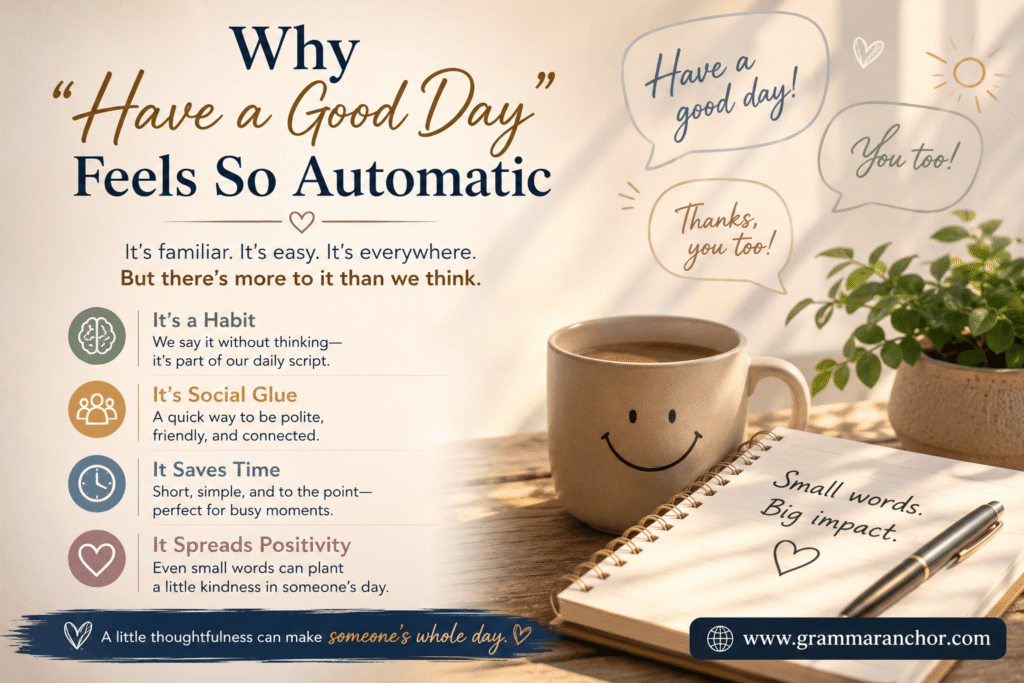
The phrase didn’t start out as filler. It grew popular through American retail and customer service culture in the mid-twentieth century, when businesses trained employees to end every transaction on a positive note. Over decades, it spread everywhere: emails, phone calls, casual goodbyes between neighbors. That widespread use is exactly what drained it of meaning.
Here’s the thing about repetition: the more often you hear or say a phrase, the less your brain processes it as a real statement. It becomes closer to background noise, similar to how “how are you” rarely triggers an actual answer anymore. That’s not a flaw in the phrase itself. It’s just what happens to any expression once it turns into a default.
This is why a have a good day alternative can land so differently. When you swap in something less automatic, the listener actually notices it, and noticing is the first step toward feeling like the sentiment is genuine.
When to Look for an Alternative
Not every goodbye needs a fresh phrase. Sometimes the classic line works fine, especially with strangers or in situations where brevity matters more than personality. But there are moments where reaching for something different makes a real difference.
Ending a work email calls for something a little more polished than a casual “later!” Texting a close friend allows for far more personality than you’d use with a client. Saying goodbye in person gives you the chance to add tone and warmth that text can’t always carry. And wrapping up a hard conversation often calls for something gentler than an upbeat, cheerful sign-off.
Matching your phrase to the moment is really the whole skill here. Once you start noticing the mismatch between generic phrases and specific situations, it gets a lot easier to pick something that actually fits.
Casual Alternatives for Friends and Family

When you’re talking to people you actually know, there’s no reason to sound like a hotel concierge. These options carry more personality than the standard line.
- “Go have some fun today.”
- “Catch you later, take it easy.”
- “Hope today treats you well.”
- “Don’t do anything I wouldn’t do.”
- “Go be great out there.”
- “Talk soon, enjoy the rest of it.”
These work because they sound like something you’d actually say out loud, not a phrase pulled from a script. If you’re texting a sibling or a close friend, swapping the generic line for one of these takes almost no extra effort and instantly feels more like you.
You might be interested in Other Sayings for “Rest in Peace” to Honor a Loved One
Professional Alternatives for Work and Email
Work communication calls for a different register. You want something polished, but not stiff enough to sound like a form letter. Below is a quick comparison to show the range, from too casual to too formal, with a balanced option in between.
| Too Casual | Too Formal | Balanced |
|---|---|---|
| “Peace out!” | “I trust the remainder of your day proceeds without incident.” | “Hope the rest of your day goes smoothly.” |
| “Later, gator.” | “I remain at your disposal for further correspondence.” | “Wishing you a productive day ahead.” |
| “K bye.” | “Please accept my sincerest well wishes for the day.” | “Take care, and talk soon.” |
Notice how the balanced column avoids both extremes. It’s warm enough to feel human, but professional enough to send to a client or manager without a second thought. A phrase like “have a great day ahead” fits comfortably here too, since it sounds encouraging without tipping into overly casual territory.
Warm and Heartfelt Alternatives

Some goodbyes call for more than politeness. If you’re writing to someone you care about, especially during a stressful week or a hard stretch, a warmer phrase carries more weight than a generic sign-off.
- “Hope today brings you something good.”
- “Sending you good energy for the day ahead.”
- “May today be kinder to you than yesterday was.”
- “Thinking of you, hope things ease up soon.”
- “Here’s hoping today goes easier than you expect.”
These lines work well in cards, in a text to a close friend, or in a message during a hard week. They don’t rely on forced positivity, which matters a lot when the person you’re writing to isn’t necessarily having a great time. Compare that to a generic “have an amazing day,” which can feel a bit tone-deaf if someone’s going through something difficult.
Short Alternatives for Quick Goodbyes
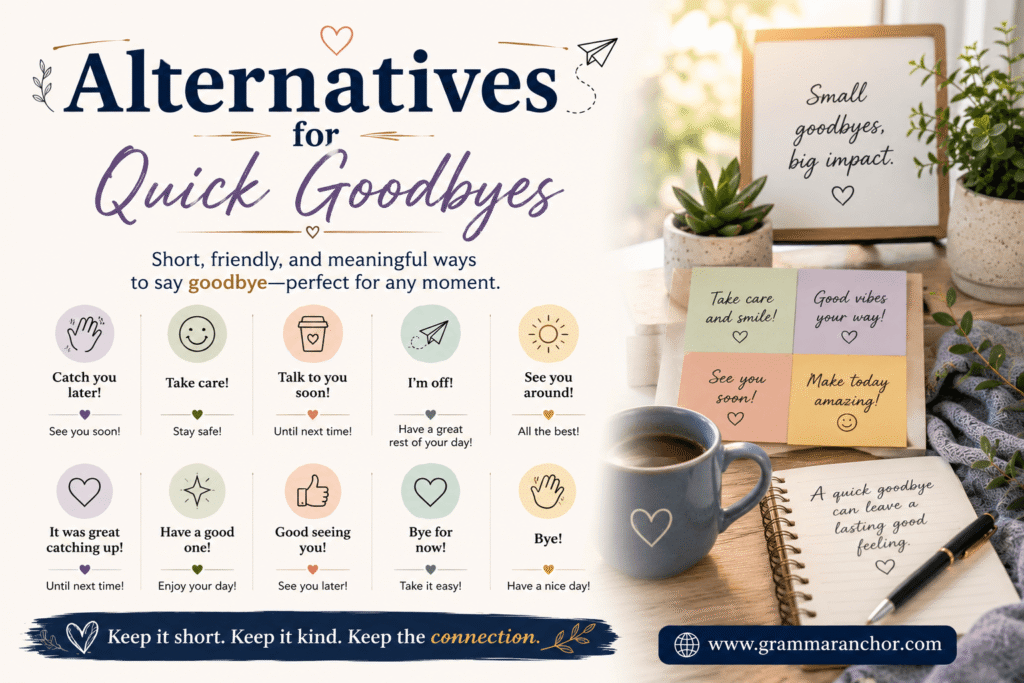
Sometimes you just need something fast. A checkout line, a quick phone call, or passing someone in the hallway doesn’t call for a full sentence. These one and two-word options do the job without dragging things out.
- Take care.
- Stay well.
- Onward.
- Be good to yourself.
- Until next time.
Short doesn’t mean careless. A quick “take care” said with sincerity often lands better than a long, elaborate send-off that feels rehearsed. If you’re looking for a fast answer to what to say instead of have a good day, this list is your go-to.
Alternatives for Specific Situations
Context changes everything. The right phrase for someone heading into a job interview looks nothing like the right phrase for someone leaving on vacation.
Heading into something stressful (an exam, interview, or hard conversation):
- “You’ve got this, good luck out there.”
- “Go show them what you’ve got.”
- “Take a breath, you’re more ready than you think.”
Heading on vacation or a trip:
- “Have a great trip, enjoy every bit of it.”
- “Safe travels, can’t wait to hear about it.”
- “Go make some good memories.”
At the end of a rough day:
- “Rest up, tomorrow’s a clean slate.”
- “You made it through today, that counts for something.”
- “Go put your feet up, you earned it.”
In a customer service or client interaction:
- “Thanks for stopping by, take care out there.”
- “Appreciate your time today, have a great one.”
- “Glad we could help, wishing you a great day ahead.”
Other Ways to Say It in Different Languages

Switching languages, even briefly, can add real warmth to a goodbye, especially with someone who has a connection to that language or culture. Here are a few genuine phrases worth knowing.
| Language | Phrase | Rough Pronunciation |
|---|---|---|
| Spanish | Que tengas un buen día | keh TEN-gahs oon bwen DEE-ah |
| French | Passe une bonne journée | pahs oon bun zhoor-NAY |
| Italian | Buona giornata | BWOH-nah jor-NAH-tah |
| German | Einen schönen Tag noch | EYE-nen SHUR-nen tahg nokh |
| Japanese | Yoi ichinichi wo | YOH-ee ee-chee-nee-chee woh |
These work best when there’s a genuine connection to the language, whether that’s a friend who speaks it, family heritage, or a shared trip you took together. Used thoughtfully, it turns a routine goodbye into something a little more memorable.
Read more about Cool Ways to Say Happy Birthday
How to Make Any Sign-Off Sound More Personal
If there’s one trick worth remembering from this entire guide, it’s this: adding one specific detail transforms any generic phrase into something that actually sounds like you mean it.
Here’s a generic version: “Have a good day!”
Add a detail about their plans: “Have a good day! Good luck with that presentation this afternoon.”
Add a detail about their mood: “Have a good day, you seemed a little worn out yesterday, hope today’s easier.”
Add a shared reference: “Have a good day! Let me know how the game goes tonight.”
Each version takes only a few extra seconds to write, but it turns a flat, automatic line into something that reflects an actual relationship. That’s really the difference between a phrase someone forgets the moment they read it and one that sticks with them.
Common Mistakes to Avoid
A few habits quietly undercut the effectiveness of any sign-off, no matter how well-chosen the words are.
Using the exact same phrase every time, regardless of who you’re talking to or what’s going on. Even a great line loses its punch through overuse, the same way “have a nice day” did.
Over-explaining a simple goodbye. A sign-off doesn’t need three sentences of buildup. Keep it short and let it land.
Picking an overly cheerful phrase in the wrong moment. Telling someone to “have an amazing day” right after they’ve shared bad news can feel careless, even if you didn’t mean it that way. Read the room before you default to enthusiasm.
Frequently Asked Questions
What’s another way to say “have a good day” that sounds less generic? Try something specific to the moment, like “hope the meeting goes well” or “enjoy the rest of your afternoon.” Adding a detail almost always beats a copy-paste phrase.
Is it unprofessional to skip “have a good day” in a work email? Not at all. Plenty of professional sign-offs work just as well, including “take care,” “talk soon,” or “wishing you a productive day ahead.”
What should I say instead of “have a good day” to someone going through a hard time? Skip the overly cheerful options. Something gentler, like “thinking of you” or “hope today’s a little easier,” tends to fit better.
Are there casual texting alternatives that don’t sound stiff? Yes. Short lines like “catch you later” or “go have some fun today” work well for texts between friends or family.
What does “have a great day” actually mean, and does it matter which version I use? The have a great day meaning is essentially a friendly wish for someone’s wellbeing over the course of their day. The exact wording matters less than the sincerity behind it, though choosing a less overused version tends to make the sentiment land better.
Read more grammar lessons on GrammarAnchor
Final Thoughts

There’s nothing wrong with “have a nice day!” It’s friendly, it’s familiar, and it gets the job done. But if you’re looking for another way to say have a good day that actually reflects the relationship, the moment, or your own personality, you’ve now got dozens of options to choose from.
The next time you’re wrapping up a text, an email, or a quick goodbye, skip the phrase you’ve typed a thousand times before. Pick something from this list, add one small personal detail, and let your goodbye actually sound like you.
